




Day Services
Golden Gate Regional Center (GGRC) offers adult day programs and services for transitioning students as well as adults of all ages who receive regional center services. These programs are designed to help you increase your independence and reach your full potential.
Most programs offer a variety of activities, but some have a focus such as employment or art.
Prior to leaving the school system, meet with your social worker and discuss your personal goals.
These goals must be written into your annual Individual Program Plan (IPP).
Your social worker will discuss potential services and programs which might be right for you.
Services and programs range in size, focus, and how many people one staff person supports.
Your social worker will connect you with community resources and service providers who will work with you. GGRC does not directly provide programs and services itself.
What Do Day Services and Programs Offer?
There is a wide range of activities, training, and support available. Your social worker can help you put a combination of these together to meet your own unique needs.
- Activities in the community
- Volunteer work
- Independent living skills
- Employment skills
- Communication and self-advocacy skills
- Social and recreational skills
- Help attending college
- Training in a specialty area such as art or food services
- Transportation training
- Help with personal care
- Help with mental wellness
- Nursing care for medical needs
The regional center is the “payer of last resort.” This means that if a service is available from another state or federal program, the regional center is not allowed to pay for it. Your social worker is required by law to suggest you contact these other programs before offering to pay for a similar service.
How Do I Learn About Service Providers?
You can get the names of the different programs and services in your area by:
- Calling your social worker
- Talking with your transition teacher
- Attending a Transition Fair, typically offered once a year by various agencies or school districts
- Asking friends who have transitioned before you
- After you have names of programs, discuss the ones that interest you with your social worker. Your social worker will know which ones are most likely to meet your needs.
- Your social worker can give you the contact information to set up tours with different program providers if you want a visit.
- When you are focused on a program, tell your social worker who will send a referral with your background and goals to the program.
- The program will review your information and goals to determine if it can meet your needs.
Before any information is shared between GGRC and a service provider, you will be asked to sign a release. A release gives GGRC your permission to share your information and goals with a service provider.
If a program is full, you can ask to be placed on the waiting list. You can try another program until your preferred program has an opening.
Meaningful Days
When Julia completed her transition program, she and her family wanted her to have a well- rounded program that provided opportunities to engage in the community, work on social skills and health, and receive vocational training. Julia and her family met with her social worker to discuss her personal hopes for the future. Together they wrote her Individual Program Plan with goals that would help increase her independence in the community and provide a pathway to employment. Next, Julia went and visited the two programs suggested by her social worker and then selected one.
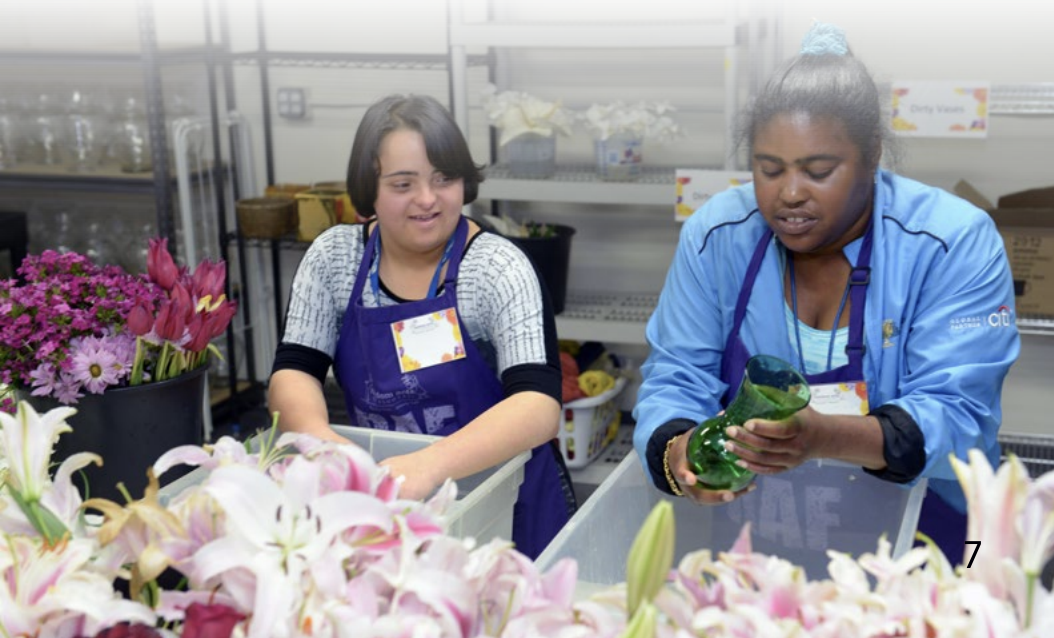
Now she works five days a week at two volunteer sites (food kitchen and food bank), goes to the gym weekly and attends a drama class at the local college. Her instructor is discovering more about her interests and strengths in order to suggest employment directions for her future.
New Types of Day Programs
- Day Services are typically offered for 5-6 hours per day, Monday through Friday.
- If flexible days/hours and more personal choices are important to you, ask your social worker about Tailored Day Services which offer 1-on-1 programming with fewer hours, and Specialized Day Services where you set up and manage your own independent program.
College and Employment
Miquel received a high school diploma and wanted to go to college. He likes computers and wants to learn to use animation software. Getting to class on time, prioritizing his assignments, socializing with others and speaking up for his needs have been challenging for him. He and his parents wanted support in these areas, so they contacted Miquel’s social worker to talk about his options.
He learned he could participate in a day program with others located at the nearby community college or receive 1-on-1 Tailored Day Services for fewer hours a week. Because he does not require staff to help him every day, Miquel chose Tailored Day Services in which his staff supports him just when and where he needs it – at college to get into classes and prioritize his homework, and in the community applying for a part-time job.
Can I Change Programs?
Yes. After attending a new program for about one month, you may want to meet with your social worker and program staff. You can talk about how things are going and discuss whether it is a good fit.
- Remember, trying new things can feel uncomfortable at first, but once you have your schedule and make friends, you might decide you like it.
- If you are not happy, your program staff or social worker may have easy solutions that will help you feel better.
- Sometimes other programs within the same organization might suit you better. Other times changing service providers is necessary.
- In the end, you decide.
Which Program is Right for Me?
The best program for you is where the activities and people “feel” good to you and you will be supported to reach your goals. To help you decide, ask a lot of questions.
- What is a typical day and week like?
- What is the schedule and what are the activities?
- How often do the people go into the community?
- How many participants does one staff member supervise?
- Does the program specialize in anything?
- Do people look happy and engaged?
- How long does an average participant stay in the program?
- What is the age range of the participants?
- What is the ability range of the participants?
- How will I get to and from the program?
- How long has the program been around?
- Are there any big changes planned to the program?
- What are the eligibility requirements for the program?
- Is there a waiting list and if so, how long is it?
- What are the attendance requirements?
Find a Day Program or Service
Contact your social worker for more information.


 Video
Video Link
Link