




Person-Centered Services
Person-Centered Practices
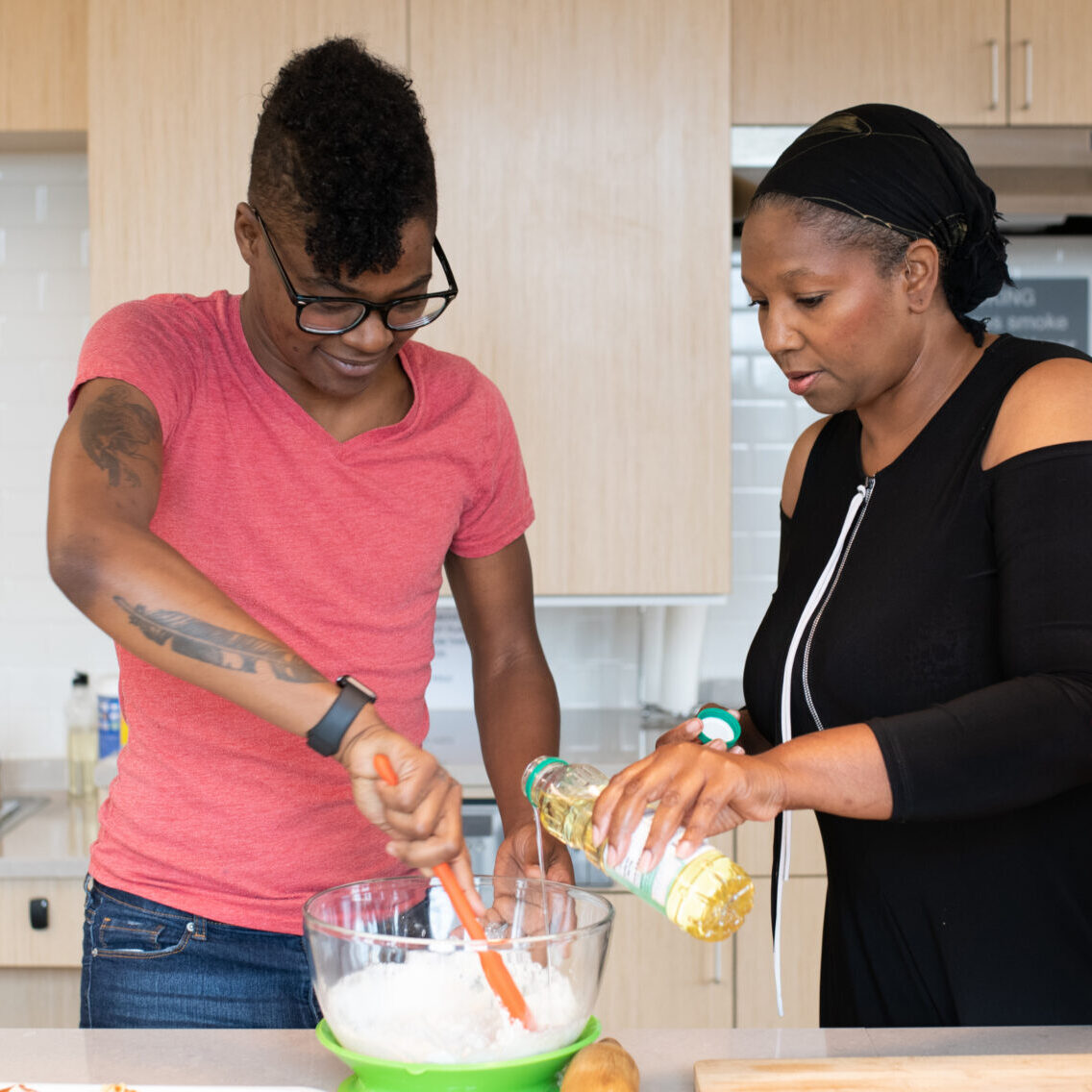
Person-centered practices describe the person-centered way that you as a service provider support those you serve. Providing services in a person-centered way means that you focus on what is important to a person, all the areas in their life that are meaningful and fulfilling. It also means that you focus on what is important for a person, all the areas in life that help the person stay healthy and safe so they can live the life they want to live. Providing person-centered services means that your services center around the choices, preferences, and dreams of the individual receiving services.
Service providers are expected to support individuals in ways that respect their rights and promote meaningful participation in their communities.
Key principles include:
- Supporting individual choice and decision-making
- Respecting dignity, privacy, and cultural preferences
- Promoting personal choice, independence and skill development
- Ensuring services reflect the goals identified in the Individual Program Plan (IPP)
Providers should ensure that service delivery aligns with the individual’s personal goals, strengths, and support needs.
Person Centered Thinking (PCT)
GGRC uses Person Centered Thinking in all its work. This approach helps us truly understand people and respect their goals, abilities, and concerns.
At its heart, Person Centered Thinking means:
- Listening carefully to what people want
- Learning who they are and what matters to them
- Working together to set goals and create plans
- Putting those plans into action
- Always treating people with dignity and respect
People have the right to make informed choices—even when those choices involve risk. Person Centered Thinking focuses on what people can do and builds on their strengths, talents, and contributions.
Person Centered Thinking developed over time when professionals recognized that traditional planning did not truly support people with intellectual and developmental disabilities in the way that people with I/DD wanted to be supported. In the late 1990s, University of Maryland professors Michael Smull and Susan Burke‑Harrison created Essential Lifestyle Planning (ELP) to focus on:
- What is important TO a person (what makes life meaningful and enjoyable)
- What is important FOR a person (what keeps them healthy and safe)
They found that good plans must also be carried out well. This led to improved training and the creation of The Learning Community for Person Centered Practices.
Service providers, GGRC staff, the individuals we serve, and their families and friends are all encouraged to attend a Person Centered Thinking Training session. These sessions focus on learning about the basics of PCT. You will learn creative ways to gather and share meaningful information, resolve problems, and create goals and action plans.
Monitor the GGRC events calendar to find schedules for upcoming Person Centered Thinking Training sessions.
You can access some helpful Person Centered Thinking tools and templates from Helen Sanderson Associates.
For more information about Person Centered Thinking visit The International Learning Community for Person Centered Practices at www.tlcpcp.com.
A person-centered planning process is not a single event or meeting, but a series of discussions or interactions.
The result is a description of a person’s preferred future, which may include:
- Where they want to live
- Who they want to spend time with
- What activities or jobs they prefer
The planning team then decides:
- What needs to happen
- Who is responsible
- When and how steps will be taken
All decisions are written in the Individual Program Plan (IPP), which serves as a record of the decisions made by the planning team.
The planning team includes:
- The person receiving services
- GGRC staff (such as a social worker)
- Service providers and support staff
- Family members, friends, or others chosen by the individual
The Planning Team is made up of the individual receiving services, their social worker or other GGRC staff, service providers, support staff, and any family members, friends, or others the individual chooses to involve.
Click on the button below to access the Your Plan guide available from the Department of Developmental Services (DDS). This helpful guide is available in English and translated into other languages.
Home and Community-Based Services (HCBS)
HCBS refers to a group of federal laws that require services for people with disabilities to be offered in a community setting, ensuring each person has the option to choose where they live and how they receive support. Examples of “community setting” may include settings outside of the person’s home, at the person’s home, or online communities. HCBS helps us change from a caregiving mindset to a supportive mindset, promoting inclusion, independence, and choice.
What is the HCBS Final Rule?
In 2014, the Centers for Medicare & Medicaid Services (CMS), a department of the US federal government, introduced the HCBS Final Rule to enhance service quality and ensure individuals have full access to community living. The rule sets standards that require settings to be more person-centered, giving individuals greater control over their lives, services, and daily activities. The California state government and the Department of Developmental Services (DDS) work in support of CMS to ensure that all providers are in compliance with HCBS Final Rule requirements.
Ongoing Compliance for GGRC Providers
Compliance with the HCBS Final Rule is ongoing. It is required that providers continue to work toward more inclusive and community-based services. This ongoing process reflects a cultural shift toward community living, person-centered services, and ensuring people we support have greater control over their lives, services, and daily activities.
HCBS Setting Requirements
All settings must meet 1-5 and 10, only residential settings must meet 6-9:
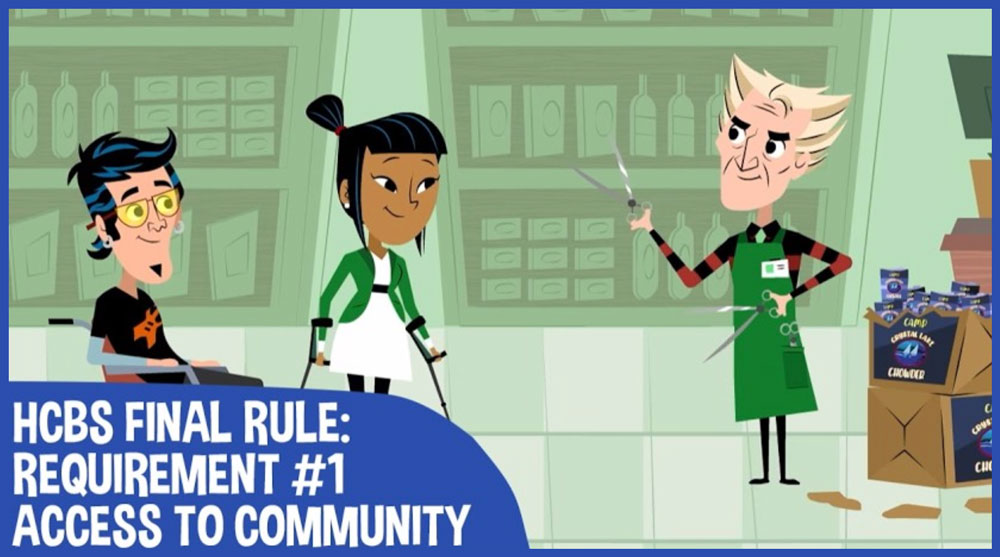
- The setting is integrated in and supports full access to the greater community, including opportunities for individuals to seek employment and work in competitive integrated settings, engage in community life, control personal resources, and receive services in the community, to the same degree of access as others not receiving services.
- The setting is selected by the individual from among setting options, including non-disability specific settings and an option for a private unit in a residential setting. The setting options are identified and documented in the person-centered service plan and are based on the individual’s needs, preferences, and, for residential settings, resources available for room and board.
- Ensures an individual’s rights of privacy, dignity, respect, and freedom from coercion and restraint.
- Optimizes, but does not regiment, individual initiative, autonomy, and independence in making life choices, including but not limited to, daily activities, physical environment, and with whom to interact.
- Facilitates individual choice regarding services and supports, and who provides them.
- The unit or dwelling is a specific physical place that can be owned, rented, or occupied under a legally enforceable agreement by the individual receiving services, and the individual has, at a minimum, the same responsibilities and protections from eviction that all tenants have under local landlord/tenant laws.
- Each individual has privacy in their sleeping or living unit (units have entrance doors lockable by the individual, with only appropriate staff having keys to doors; individuals sharing units have a choice of roommates in that setting; and Individuals have the freedom to furnish and decorate their sleeping or living units within the lease or other agreement).
- Individuals have the freedom and support to control their own schedules and activities and have access to food at any time.
- Individuals are able to have visitors of their choosing at any time.
- The setting is physically accessible to the individual.
What is a modification?
A modification is a change to someone’s rights and can only be made for requirements #6, #7, #8, and #9 (the residential requirements). No one can modify an individual’s right to choice.
A modification is made for someone’s safety and the safety of others. It can only be implemented with the agreement of the person it is for (the person with I/DD) and their circle of support. Before someone’s rights are modified, positive interventions and supports must be tried and documented in the individual service plan.
Modifications are not a loophole to bypass compliance. They should always be used as a last resort and in the best interest of the individual.
What does the HCBS Final Rule Mean to You?
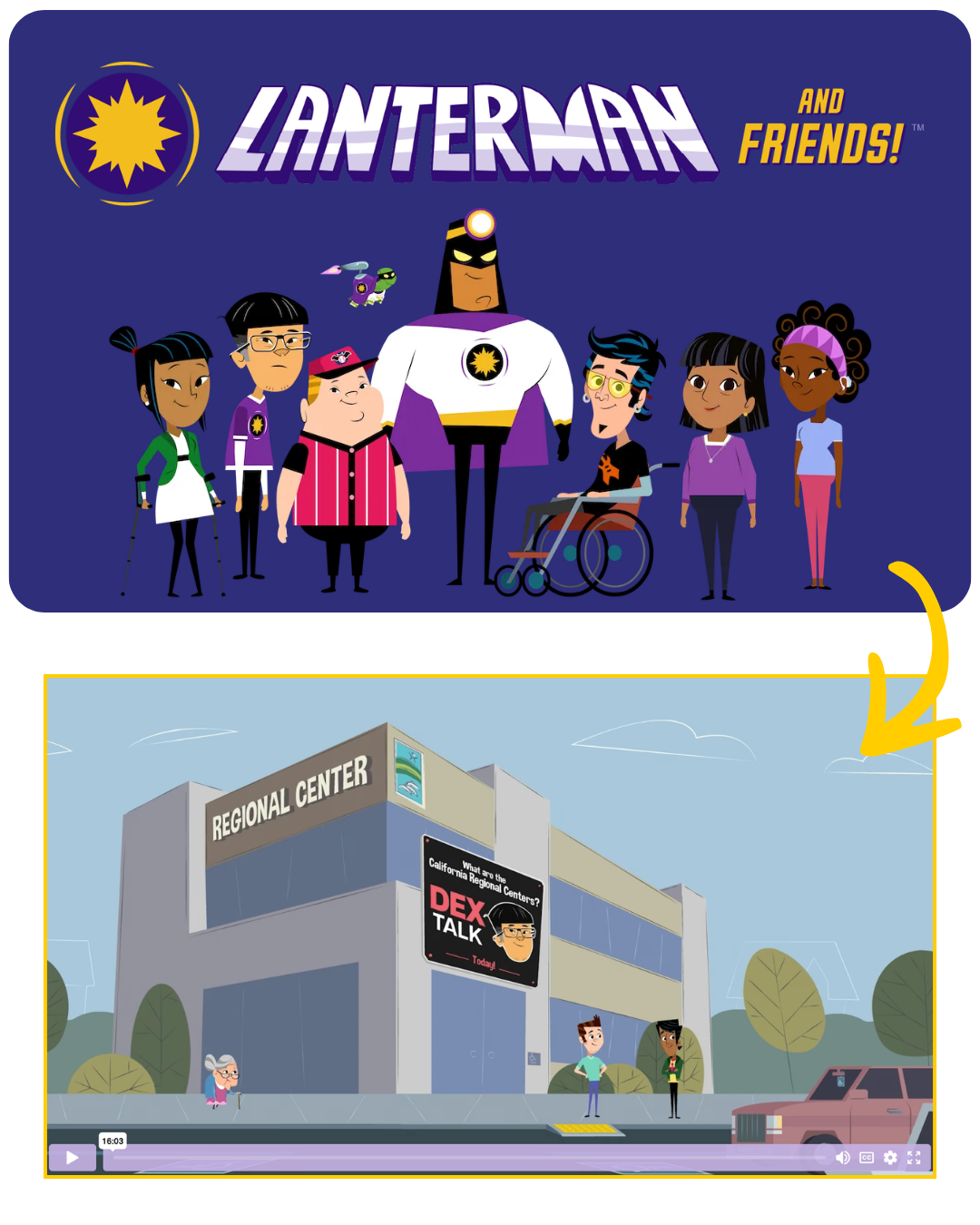
Join Lanterman and Friends for several series of short, humorous, and information-packed stories that explain the complex but critically important Regional Center system to the half million Californians with intellectual or developmental disabilities, their families, service providers and staff of thousands of service providers across the state.
Each episode is translated into 20 languages, including ASL.
In the Lanterman and Friends animated videos, Lorenzo, Maya, Dexter, Steven, and superhero Lanterman share stories to help explain the rights of people under HCBS. The series was created to better equip regional centers, service providers, and the broader community to understand and implement HCBS Final Rule requirements.
Made in partnership with Tri-Counties Regional Center and Public Pixels Media, the animated series won 3 Anthem Webby Awards! The awards recognize the series for their impact on accessibility, education, and creative storytelling. They won two silver awards for Diversity, Equity & Inclusion (DEI) through community collaboration and innovation and a bronze award in DEI for community engagement.
HCBS Provider Resources
- HCBS Onsite Evaluations: Provider Guidance
- HCBS Onsite Evaluations: Provider Guidance – Plain Language
- HCBS Review Tool
- HCBS Review Tool: Non-Residential Settings
- HCBS Settings
- HCBS Training Material: Compliance Guidelines
- HCBS Rules and Requirements Presentation
- HCBS Supporting Document Examples
- Guiding Questions for Validation and Remediation Review
- DDS HCBS Training & Information Webpage
- DDS HCBS Webinar: Strategies for Providing Services in Alignment With the Final Rule (Video)
Who can I contact for assistance?
For questions regarding HCBS compliance, monitoring, or support, please reach out to the Community Engagement Specialists at hcbs@ggrc.org.